

You see Wine Red Hair in a salon chair, rich and dimensional, and you know exactly how it should look. But the image that sent you to the colourist — that glossy, cool-toned depth — often doesn’t account for what happens after the wash. The real trick isn’t picking the shade; it’s keeping that shade from turning brassy, managing roots that show up suspiciously fast, and figuring out if your undertone is actually working with the colour or quietly fighting it. Most advice skips straight to celebrity inspiration and leaves the daily maintenance entirely to guesswork.
If you are still deciding on the exact depth, it helps to browse options beyond the classic shade — wine hair color covers the range from bright to muted. And if you want something slightly warmer, burgundy brown hair offers a softer transition from your natural base.
24 Wine Red Hair Looks That Make Fade and Roots Feel Intentional
These styles are chosen not just for how they look fresh from the salon, but for how they age — how the colour shifts, how the roots grow in, and how much work you actually need to put in to keep them sharp. Some cuts disguise regrowth. Others hold the red better through the mid-lengths. All of them give you a starting point that works with your texture, not against it.
The Long, Layered Wave (No Fringe Needed)
These styles rely on shape and movement — not a heavy fringe — to give the wine red dimension. Perfect if you want the rich colour to do all the talking while the layers soften your face.
Soft Blowout with Side Part

by Pinterest
This cut works on long layered hair and relies on a smooth blowout to create soft voluminous waves. The side part pushes volume to one side, while the layers subtly reduce weight through the ends. Clip each section vertically away from the scalp as you roll the brush down — that keeps the root lift stable even if your hair is heavy. The face-framing long layers sweep around the cheeks and jawline without a heavy fringe, meaning the rich wine red tone does the contouring. This shape suits oval, heart, and long faces best because the side volume balances the lower half.
Moody Waves with Smooth Crown

by Pinterest
Long layered waves get their drama here from a smooth crown that turns into soft, undone movement from the mid-lengths down. The cut keeps a solid weight line through the top, which stops the colour from reading flat. After setting the waves with a curling iron, pin each curl flat to the head to cool completely — the tension creates a glassy wave pattern that stays for hours, not minutes. The long layered pieces fall around the cheeks and jaw, softening sharper bone structure. The moody, deep wine red shade adds an almost velvet-like dimension in natural light, making it an excellent choice for evening without looking overdone in daylight.
Dark Root Depth on Loose Waves

by Pinterest
This style deliberately leaves the roots a shade deeper, which is the single most useful trick for extending time between salon visits. The long, loose waves are cut with subtle layering that only starts below the chin, so the body stays concentrated where it matters. Blow-dry the roots straight downwards first — lifting them too early can break the seamless blend into the lighter lengths. Soft waves and glossy finish keep the whole look intentional rather than grown-out. Because the face-framing is minimal, the wine red hue sits back just enough to feel rich without overwhelming your features. It flatters oval, heart, and long face shapes.
Side-Swept Volume Layers

by Pinterest
Long hair with side volume and soft face-framing pieces relies on a cut that releases weight only through the very ends. The side part lifts the crown naturally, and the layered movement around the cheeks creates a gentle contour without a defined fringe. Tip your head upside down when you apply dry shampoo at the roots, then massage it in with your fingers — the volume will hold all day without visible residue. The glossy finish keeps the wine red from looking dusty, even after several washes. Soft layers fall around the cheeks and jaw, so the colour catches the light exactly where you want it. This works especially well on oval and heart-shaped faces where width at the temples benefits from that sweeping volume.
Feathered Mid-Length Layers

by Pinterest
A long layered cut with soft, feathered movement through the mid-lengths creates a romantic shape that looks polished but not rigid. The layers are placed to taper toward the jaw and collarbone, so the wine red colour shifts in depth as it moves. Use a medium-hold mousse on towel-dried hair, then twist large sections loosely and let them air-dry — the feathered ends will form a natural S-wave without heat tools. Gentle front layers soften the sides of the face, making this cut a smart pick for those who want framing without the upkeep of bangs. The smooth crown and subtle volume balance heart and square face shapes well, while the gloss keeps the red looking expensive.
Long Feathered Gloss Layers

by Pinterest
Long feathered layers that open around the face give this style its light, airy movement. The cut keeps the outline soft, so the deep wine red appears rich rather than heavy. A smooth blowout finish on the top transitions into gentle waves through the ends — that slight change in texture stops the colour from reading one flat note. Apply a tiny drop of hair oil to your ends before you start styling; it seals the cuticle and makes the feathered tips flick outward naturally instead of clinging together. The front sections sweep away from the cheeks, which suits diamond and heart-shaped faces by opening up the cheekbones. This style also works well with a centre or side part depending on your hairline.
The Half-Up Twist Wave

by Pinterest
A half-up style adds a gentle lift at the crown while the rest of the length flows in soft, undone waves. The front pieces are left loose to frame the face, which keeps the whole look from feeling too formal. A simple black clip gathers the top section, so the focus stays on the wine red colour and the natural texture. Before you twist the top section back, spritz it lightly with a flexible hairspray — that little bit of grip prevents the clip from sliding out on fine or slippery hair. The voluminous crown works especially well for long or rectangular face shapes because it adds width at the temples, while the soft side-swept layers soften any angularity. This style buys you an extra day before washing, too.
A Fringe That Changes Everything
From curtain sweeps to blunt lines, a well-placed fringe gives wine red hair an entirely new frame. These cuts show how different bang styles work with your wave pattern and face shape — so you can choose a fringe you will actually style, not just admire in a photo.
Voluminous Side-Sweep Waves

by Pinterest
Long layered waves with a dramatic side sweep create instant volume and movement. The layers start around the chin, so the weight stays at the bottom while the top retains enough density to hold height. Switch your parting while the hair is still damp and let it set that way — a satin-covered roller placed right at the new parting line will lock in the lift without teasing. The face-framing front layers sweep across the forehead and fall around the cheeks, softening square and heart-shaped faces. The deep wine red colour takes on extra dimension because the side-swept styling catches the light on the top layers. Hoop earrings are all the accessory you need here — the hair does the rest.
Curtain Bangs with Rounded Blowout

by Pinterest
Curtain bangs on a long layered cut open up the face while adding softness around the cheekbones. The blowout creates a rounded, bouncy movement through the mid-lengths and ends, which gives the wine red a plush, expensive-looking finish. After drying your bangs, roll them back away from the face on two large Velcro rollers and let them cool completely — that trains them to sit in a natural split rather than falling flat against the forehead. Long layers blend the fringe into the rest of the hair, so there is no harsh line. Because the face-framing starts high and tapers down, this cut works particularly well on oval, heart, and square face shapes that benefit from a bit of width at the temples.
Full Curtain Bangs and Layered Ends

by Pinterest
This cut pairs a full, rounded blowout shape with curtain bangs that start deep and taper softly. The voluminous layered ends keep the silhouette from falling flat, even on thick hair that usually drags down. When you blow-dry the bangs, aim the nozzle straight down along the hair fibres — rough drying side to side creates cowlicks that will fight you all day. The long curtain layers sweep around the cheekbones and jaw, which gives the face a slimming frame without needing a heavy fringe. The glossy finish makes the deep wine red and plum undertones look rich in low light and luminous near a window. This style works especially well for square and heart-shaped faces that want softening around the outer edges.
Cascading Side-Fringe Layers

by Pinterest
A side-swept fringe merges seamlessly with long cascading layers in this cut, creating a continuous line of movement from the crown to the ends. The blowout is smooth and glossy, with gentle waves that start just below the chin to keep the volume lifted. Instead of cutting layers while the hair is wet, ask your stylist for a dry-cut on the fringe section — it sits exactly where you position it and requires no morning persuasion. The face-framing front pieces sweep across the forehead and soften the cheekbones, blending out toward the shoulders. This style flatters oval, heart, and square faces because it narrows the top while keeping width at the jaw area in check. The wine red tone stays dimensional, even after a few washes.
Center-Parted Curtain Wave

by Pinterest
Long curtain layers paired with a centre part create a symmetric, face-framing effect that works with your natural hairline. The soft voluminous waves start below the jaw, so the front remains clean and uncluttered. When curling sections around your face, twist the iron away from your parting on both sides — that opens the cheek area and gives the bangs their signature swoop. The dimensional colour blending between wine red and plum means the hair catches different tones as it moves, which adds depth without heavy highlighting. This shape suits oval, heart, and square faces because the volume sits lower and balances a wider forehead or jaw. A centre part also makes root touch-ups less visible, since the colour melts outward gently.
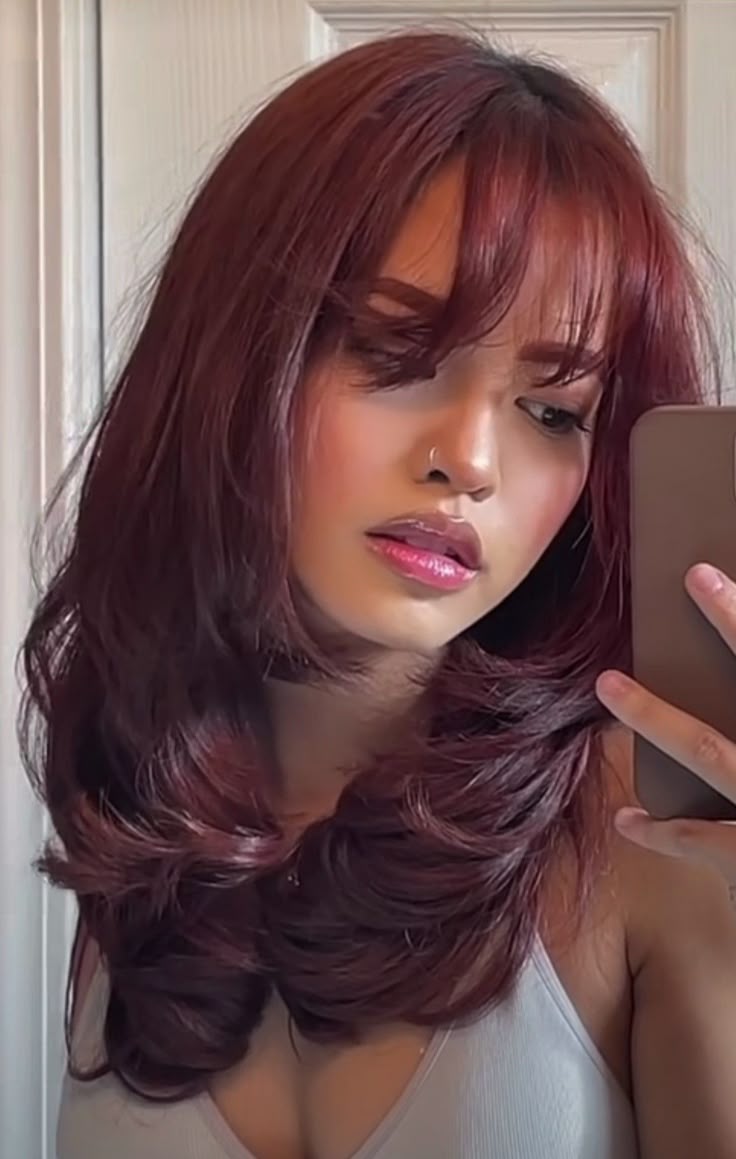
Wispy Bangs on Feathered Shag
by Pinterest
A long shag with feathered, flipped-under ends and wispy bangs gives wine red a softer, more undone energy than a classic blowout. The layers are cut to move separately, so the overall shape feels airy and light even on thicker hair. After a rough blow-dry, go back in with a small round brush on just the fringe and front sections — this gives those face-framing pieces polish while the rest stays textured. Soft wispy bangs and layered front sections sweep around the cheeks and jawline, creating a slimming frame. The glossy finish on the ends prevents the shag from reading too messy. This cut flatters oval, heart, and square face shapes, and the feathered movement makes regrowth look intentional, not unkempt.
Blunt Fringe with Rounded Ends

by Pinterest
A full, dense blunt fringe paired with soft voluminous layers and rounded ends gives this long cut a polished, almost editorial presence. The fringe sits heavy across the forehead, drawing attention straight to the eyes, while the layered front pieces keep the jawline from looking wide. On humid days, mist the fringe with a light leave-in conditioner and blow-dry it flat using a paddle brush — no round brush, which would create bends that break the blunt line. The wine red colour takes on a sultry depth with this shape because the solid front area acts like a block of pure pigment. This style suits oval, heart, and diamond face shapes best, since the fringe balances a longer forehead and the soft layers around the cheeks prevent harshness.
Sleek, Straight, and Shine-Ready
When wine red hits a high-shine surface without competing texture, it reads like liquid glass. These straight cuts use length and precise layering to make the colour the star — plus, they tend to show less visible fading because the smooth surface reflects light evenly.
Glossy Blowout with Curtain Layers

by Pinterest
Straight hair gets a soft, rounded lift from long curtain layers that open around the face. The blowout creates subtle volume at the crown while feathered ends bend inward just slightly at the shoulders. Work a lamellar water treatment through the mid-lengths and ends before your blow-dry — it seals the cuticle instantly and gives straight hair a glass-like surface that reflects colour. The front sections contour the cheeks and jawline without covering them, so the wine red appears to wrap the face rather than sit flat against it. This cut works well on oval, square, and long face shapes because the gentle inward bend shortens the visual length. A high-shine finish here is essential — anything less and the solid colour can look dull.
Sleek Side-Sweep with Inward Bends

by Pinterest
Long straight hair with a deep side-sweep and soft inward bends at the ends creates a feminine, polished silhouette. The feathered layers add just enough movement to keep the style from looking like an one-length sheet. A ceramic round brush with a metal core heats evenly and cuts your blow-dry time in half — invest in one if you wear your hair straight more than twice a week. The side-swept front sections contour the cheeks and jawline, drawing attention upward. Because the wine red sits on a smooth surface, the colour reads deeper in low light and brighter near a window. This style flatters oval, round, and heart-shaped faces because the side volume balances width and the soft bends break up the lower face without heavy layering.
Wispy Bangs and Tapered Length

by Pinterest
Wispy bangs and long tapered layers give straight wine red hair a softer, more approachable look than a blunt cut. The layers fall along both sides of the face, barely grazing the cheeks, while the bangs sit lightly on the forehead. After washing, comb the bangs straight down and let them air-dry without touching — hands create oil that breaks the delicate separation into strands. The sleek straight finish keeps the overall shape clean, making this a good choice for fine hair that needs minimal layering. The slight undone texture at the ends prevents the style from looking too severe. This cut suits oval, heart, and long face shapes because the wispy fringe shortens the forehead softly, while the tapered sides add width at the cheek area.
High-Gloss One-Length Layers

by Pinterest
A sleek long cut with barely-there layering preserves the weight of the hair and gives wine red a liquid-like finish. Soft layers begin below the cheek area and taper gently along the jaw and shoulders, so the front stays smooth and elongated. Use a boar-bristle brush for the final pass after your blow-dry — it distributes the natural scalp oils down the shaft and adds a level of gloss no silicone serum can replicate. Because the cut keeps most of its weight in one line, the colour reads as a solid, rich block. This works especially well on oval, heart, and long face shapes, as the sleek sides narrow the face without carving into it. A high-shine gloss treatment every few weeks will keep the wine red looking salon-fresh.
Curtain Bangs on Straight Gloss

by Pinterest
Long curtain bangs cut into straight hair soften the forehead while the rest of the length falls in a simple, glossy blowout. The subtle volume at the crown lifts the centre part just enough to keep the style from feeling flat. When your curtain bangs start to grow past your brows, resist trimming them yourself — point-cutting straight across is how they lose their soft, feathered finish; let a pro maintain the shape. The face-framing layered front pieces sweep across the cheeks and jawline, adding a slimming effect. Nose ring and layered necklace add an edge without competing with the deep wine red. This cut works well for oval, round, and heart-shaped faces, because the open centre part and curved fringe visually lift the eye area and balance wider cheekbones.
The Shoulder-Length Lobs and Shags
Shorter lengths give wine red a different energy — more modern, a little undone, and surprisingly forgiving as roots grow in. A lob or shag that already leans into texture can make the line between fresh colour and regrowth feel intentional.
Side-Parted Lob Waves

by Pinterest
A shoulder-length lob with a deep side part and soft voluminous waves gives the wine red a glamorous, evening-ready feel even in daywear. The layers start at the chin and curve inward around the cheeks and jawline, which creates a soft contour without blocking the face. Work a wave spray into damp hair before you air-dry — the salt-free kind gives hold without crunch, so the texture stays touchable for longer. The smooth glossy finish keeps the colour from looking flat on shorter lengths, where light catches differently. This shape flatters oval, heart, and square faces because the asymmetric part and inward curve balance a stronger jaw. The black choker and heart-shaped earrings add to the sultry mood, but the cut holds its own without them.
Flipped-Out Shoulder Bob

by Pinterest
A shoulder-length cut with softly flipped-out ends gives wine red a playful, retro touch without full styling commitment. The subtle face-framing layers sweep across the forehead and cheekbones, while the graduated layers through the back keep the shape from looking bulky. To get the flipped ends to stay outward all day, run a small flat iron over just the tips and twist it outward — no bigger than an inch from the ends, or the shape collapses. High-shine gloss is essential on straight, short wine red hair because any dullness shows immediately. The light volume at the crown lifts the eye, making this cut a smart pick for oval, heart, and square face shapes that might otherwise feel bottom-heavy with a solid block of colour at the shoulders.
Piecey Shag with Curtain Bangs

by Pinterest
This shoulder-length shag uses piecey layers and curtain bangs to create a moody, slightly undone silhouette. The tousled waves add texture without looking messy, and the voluminous crown lifts the whole shape. Air-dry your hair in two loose braids after applying a curl cream — when you take them out, the waves will have a piecey, natural separation that a curling iron cannot duplicate. The curtain bangs soften the cheekbones and jawline while keeping the forehead open, which makes the wine red read as modern rather than costumey. Because the cut already has built-in texture, root regrowth blends in with less obvious lines. This style works on oval, heart, and square faces, and the slightly undone finish means you can stretch washes further.
Undone Wispy Shag

by Pinterest
A shorter shag with wispy bangs and piecey layers gives wine red an alternative, lived-in feel. The volume at the crown is subtle, not teased, and the feathered ends keep the cut light even on thick hair. Use a texturizing spray on dry hair, then scrunch it upward with your palms — that builds the piecey separation without making the colour look chalky. Wispy bangs sweep across the forehead and cheekbones, drawing attention straight to the eyes. This cut suits oval, heart, and diamond faces because the layers create width at the temples and cheek area, which softens a narrower jaw. Facial piercings and layered necklaces complete the look, but the wine red colour carries enough personality on its own — that depth turns the shag into something deliberate, not undone.
Tousled Curtain Bob

by Pinterest
A shoulder-length bob with curtain bangs and soft feathered layers creates the rare polish-meets-ease balance. The blowout gives subtle volume at the roots and a slight inward bend at the ends, while the curtain bangs open at the centre to frame the eyes. On the days you skip washing, mist the front section with a water-and-leave-in mix and re-blow-dry just the bangs — two minutes resets the whole shape. The wine red tone reads softer on this length because the cut shows less solid colour at one glance. This style works for oval, heart, and square face shapes because the centre opening draws the eye upward, while the longer side layers soften a strong jaw. The lightly tousled finish keeps the look from feeling too precious — it moves with you, not against you.
Why Your Wine Red Fades Faster Than Any Other Shade
The pigment size problem: Red dye molecules are physically larger than those in brown or blonde formulas. They sit mostly on the outside of the hair cuticle instead of penetrating deep into the cortex. Water, friction, even a rough pillowcase dislodge them faster. Most guides recommend washing less often. I’d argue temperature matters more, because even one hot rinse opens the cuticle enough to release weeks of pigment in a single shower.
Shower temperature physics: Water above lukewarm — colourists often point to around 38°C as the threshold — forces the hair shaft to swell. That squeezing motion pushes red molecules right out. Stick to cool water for the final rinse. You don’t need an ice bath; water that feels slightly cool on your skin is enough to seal the cuticle flat again.
The hard‑water connection: Mineral buildup from unltered tap water coats each strand and chemically interacts with red pigments, nudging them toward a brassy orange. A simple shower filter removes iron and calcium before they touch your hair. In US regions with hard water, women often notice colour fading two to three washes sooner — a ten‑dollar filter changes the timeline dramatically.
Sulfate‑free isn’t always enough: Many colour‑safe shampoos still contain surfactants with a high pH that lifts the cuticle. Look for formulas with polyquaternium sealers and cationic polymers that bind to damaged areas instead of stripping them. Those ingredients slow colour loss better than the “sulfate‑free” label alone, which is why a specific wine red hair routine often needs a dedicated shampoo beyond what the drugstore shelf suggests.
The one product most first‑timers skip: A colour‑depositing conditioner in a true wine tone. Use it once a week to reset the shade between salon appointments. Apply only to damp hair — not soaking wet — and work in sections. Most women worry about stained hands, but a pair of disposable gloves solves that instantly while the pigment reattaches to the outer cuticle where it belongs.
Is Your Undertone Sabotaging Your Wine Red Hair?
Blue‑based vs. copper‑based wine reds decoded: A blue‑backed wine red reflects cool violet light, which calms olive skin and makes fair pink undertones look porcelain rather than flushed. A copper‑infused wine red leans warm and can turn sallow complexions yellow. The conventional take is to match warm skin to warm wine reds. That misses the reality that olive skin often carries cool undertones — a copper‑based shade might make you look tired by lunchtime.
The jewellery test you should do before the salon: Forget silver and gold jewellery alloys — they reflect unevenly on skin. Instead, hold a swatch of true silver fabric and then a mustard‑yellow or true‑gold fabric against your wrist in natural daylight. If the silver makes your veins look bluer and your skin brighter, you lean cool. That points you toward wine red hair for cool undertones — shades with a blue or violet base, not orange. If gold fabric warms your complexion evenly, you can handle copper‑tinged wine reds.
Real‑lighting trap: Salon mirrors exaggerate warmth. Ask your colourist to take you to a window before finalising the formula. A wine red that glows under warm bulbs can look flat and muddy in an office with fluorescent light. You see the difference in the car visor mirror, and by then, you’re already driving home. A quick daylight check prevents a six‑week regret.
Facial redness and wine red hair: If you have rosacea or chronic surface redness, avoid warm wine tones that reflect orange back onto your cheeks. A cool‑toned gloss with a hint of violet absorbs that redness visually. A root‑shadow technique — keeping the first inch or two slightly deeper and cooler — also creates a barrier between the red strands and your skin, stopping the colour from blending straight into your flush.
The “one shade deeper” rule: Neutral undertones often pick a medium wine red that washes them out in interior light. Always go one level deeper than the shade that first catches your eye on the colour chart. That extra depth adds definition around the face, much like the way a dark burgundy hair shade frames features better than a mid‑tone — especially if you’ve seen how dark burgundy hair photographs on clients with similar colouring.
Root Grow‑Out You Can Actually Live With
The line‑of‑demarcation panic and how to avoid it: A solid, all‑over wine red with a flat root creates a harsh stripe as soon as natural colour appears. The cut makes a huge difference. For round faces, keep depth lower at the sides with a root shadow that melts softly; it elongates. Square faces benefit from a lightened money piece near the temples that draws the eye upward, softening the jaw. Heart‑shaped faces can take the wine tone slightly brighter around the chin through a balayage, balancing a wider forehead. Oval faces carry most placements, but a subtle root smudge starting two inches from the parting keeps the grow‑out from looking blocky. Simple over stacked: an one‑length cut grows out with a softer line than heavily layered styles, especially if your hair is fine.
The demi‑ vs. semi‑permanent split: Semi‑permanent colour sits only on the cuticle and fades completely over four to six weeks, leaving no obvious line. Demi‑permanent penetrates slightly and creates a softer regrowth than permanent dye, but not as seamless as semi. Many stylists default to permanent for vibrancy; ask specifically for a demi if your natural colour is within two levels of the target wine red, and you’ll watch the roots blend rather than stripe.
Root‑smudging at home that actually works: Temporary root‑cover powders and sprays in auburn or dark reddish brown match grow‑out better than generic brown. Apply with a small, dense brush right at the parting, then mist lightly with water and tap with fingertips to blur the line.
Stretching salon visits without looking unkempt: Over several months, shift to a wine red hair with highlights concentrated through the mid‑lengths and ends — a balayage pattern. The roots become part of a sunkissed brunette effect, and the wine tones stay exactly where you want them.
When to embrace the fade: After four weeks, a deliberately created rose‑gold ombré from faded wine red buys you extra time. Ask for a clear or slightly rose‑toned gloss at the salon to blend the transition, and suddenly the grown‑out colour looks intentional.
Dressing for Wine Red Hair Without Looking Like a Holiday Party
The black‑clothing paradox: Black can drain a dark wine red, especially in winter light, making the whole look feel heavy. Swap black for charcoal, slate blue, camel, or olive. These neutrals lift the hair’s violet undertones instead of absorbing them. A charcoal trench coat next to wine red strands reads polished, not somber.
Makeup that doesn’t compete: Berry lipsticks harmonise with cool wine reds; brick tones fight them. A sheer berry stain lets the hair dominate, while a matte brick red creates visual noise. Nude‑pink lips with a cool undertone work for daytime. The rule: your lip should share the hair’s temperature, not its intensity.
Blush and bronzer recalibration: Peach blush often turns orange next to wine red hair because the hair pulls warmth forward. Switch to a cool mauve or dusty rose. Apply bronzer lighter and higher on the cheekbones, almost as a contour, so the face still reads as sculpted without a sallow cast.
Jewellery metal switch: Yellow gold tends to pull out orange notes in some wine reds, especially ones with even a hint of copper. White gold or silver acts as a corrector, making the red look cooler and truer. If your colour starts fading brassy mid‑month, swap your earrings to silver and notice the difference in the mirror before you even reach for the toner.
Patterns that work: Burgundy‑based florals and navy stripes create harmony. Avoid large‑scale red check patterns — they sit too close to the hair tone and blur together. A crisp white shirt with a wine red knitted vest picks up the colour without turning you into a matching set, much like how a cherry red hair shade reads as deliberate against analogous forest greens.
The 5‑Minute Wine Red Refresh That Buys You Weeks Between Salons
Colour‑depositing conditioner cocktails: Mix two shades to match your exact fade instead of using a single generic tone.
When your wine red starts to look more burgundy‑brown, a mix of wine and mahogany conditioner brings it back to a true wine hair color. Store the blend in a travel bottle so you always have your custom fix. A 2:1 ratio of wine to mahogany usually neutralises any orange creeping in.
Application sequence that prevents patchiness: Start on damp, freshly clarified hair and clip it into four sections.
I see too many women slap conditioner on dry hair and pray. Damp hair swells slightly, letting the deposit grab evenly. Work from the nape upward, and at the crown, use a wide‑tooth comb to drag the product through the last two inches — that’s where colour fades hardest.
The 2‑minute leave‑on rule: Leave the conditioner on for exactly two minutes for a true deposit, not a tint.
Less time works better if your hair is fine or porous; it picks up pigment fast. I’d rather you stick to two minutes than ten — overdepositing looks muddy, not richer. Rinse with cool water until it runs clear, then give it a quick final shot of cold water to seal the cuticle.
Stain‑proofing your routine: Follow immediately with a silicone‑free styler to seal the colour in.
A lightweight cream or foam without silicones creates a breathable film that stops pigment transferring to your collar. Apply it from mid‑lengths to ends while hair is still wet, then scrunch out excess with a microfibre towel. That extra step means you can wear a white shirt the next day.
One product to keep in your gym bag: Toss in a quick‑spritz colour refresher mist.
Pool water often leaves a subtle green cast on wine red hair. A mist with violet undertones neutralises it in a single spray before you even leave the changing room. Look for one labelled “colour refresher” rather than a dry shampoo — those often have chalky residues that dull the red.
FAQ
Will wine red hair make my hair look thinner or flatter?
Not if you ask for a gloss application rather than permanent dye. A gloss sits on top and actually adds light‑reflecting dimension, which makes fine hair appear fuller. Ask your colourist for a demi‑permanent gloss with a cool violet base — it builds depth without weighing hair down.
How do I prevent wine red hair from staining my pillowcases?
Use a silk or satin pillowcase every night; cotton absorbs far more pigment. Make sure your hair is fully dry before bed because dampness releases colour onto the fabric. A final pre‑bed step: run a few drops of lightweight silicone‑free oil through your ends to lock the surface.
Can I get true wine red hair without bleaching my dark brown hair?
Yes, but the result will be a muted, subtle wine tint — think a deep cherry‑cola rather than a bright violet‑red. Ammonia‑free high‑lift formulas or demi‑permanent dyes designed for dark hair can get you there without pre‑lightening. For full vibrancy, partial balayage that lightens only the mid‑lengths and ends is a gentler compromise.
Is wine red hair considered professional in a conservative office?
In most US workplaces, a deeper, cooler wine red reads as refined, especially when styled neatly. Stay away from neon or purple‑leaning shades if your environment is strict, and keep the rest of your look polished — a sleek blow‑dry instead of messy waves signals intent. If you are unsure, start with a root shadow that concentrates the colour lower down.
What do I do if my wine red hair turns a brassy orange?
First, use a purple or deep blue shampoo once a week to knock out the orange. Then apply a cool‑toned wine red colour‑depositing conditioner and leave it on for three minutes. If the brass persists after two washes, a salon demi‑gloss will correct it without further damage.
Which face shapes benefit most from wine red hair with a root shadow or balayage technique?
Round faces gain length when a darker root melts into face‑framing wine red highlights. Square faces soften with a balayage that starts below the jawline, breaking up angular lines. Heart‑shaped faces look balanced when a root shadow keeps the forehead area darker, pulling focus to the cheekbones.